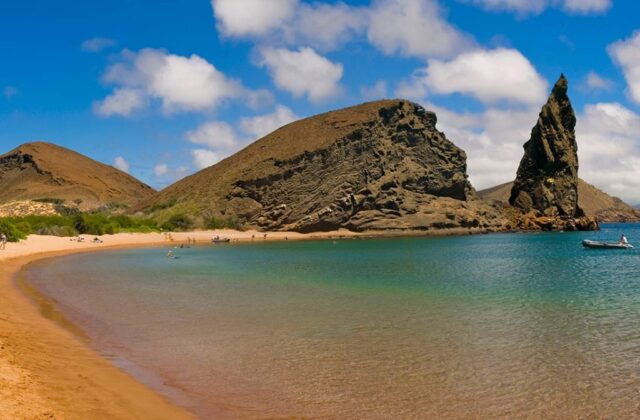
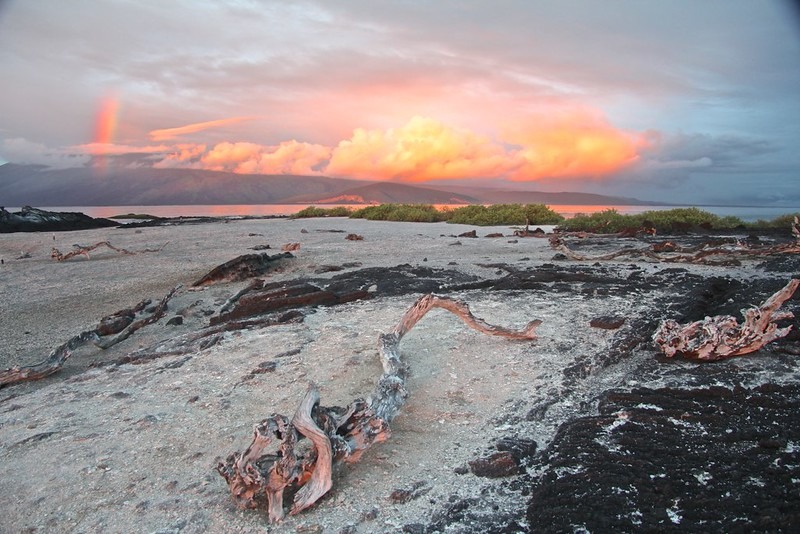
Most Galápagos charters run either an eastern or western island route — and they offer genuinely different wildlife and landscapes. Here’s how to pick the right one.
Because the Galápagos archipelago is spread across a wide area, most charter itineraries (typically running 4 to 8 nights) focus on either the eastern or western islands rather than covering the entire archipelago in one trip. Each route offers a genuinely different experience, and understanding the difference helps you pick the one that actually matches what your group wants to see.
The Eastern Islands
Generally centered around islands like San Cristóbal, Española, and Santa Cruz, the eastern route tends to be known for:
- Giant tortoises, especially in the highlands of Santa Cruz, where they roam in a more natural, less staged setting than a typical wildlife park
- Blue-footed booby colonies, particularly notable on Española
- Sea lion colonies, often approachable and genuinely one of the highlights for families with kids
- A slightly gentler, more classic “Galápagos highlight reel” feel, which can be a good fit for first-time visitors or a family group wanting the most iconic wildlife encounters
The Western Islands
Centered around Isabela and Fernandina, the western route tends to be known for:
- More dramatic volcanic landscapes — recent lava fields, unique geology, and a rawer, more remote feel
- Marine iguanas, found in larger numbers in this part of the archipelago
- Higher chances of spotting whales and dolphins, given the nutrient-rich currents in this region
- A more adventurous, less-visited feel, appealing to repeat visitors or a group specifically drawn to the geology and more remote wildlife encounters
How to Actually Decide
A few honest questions to guide the choice:
- Is this your family’s first Galápagos trip? The eastern route’s more classic wildlife highlights (tortoises, boobies, sea lions) often make for a strong first visit, especially with kids.
- Is your group drawn more to dramatic landscapes and geology, or classic wildlife encounters? The western route leans harder into volcanic scenery; the eastern route leans into iconic animal encounters.
- How much boat time is your group comfortable with? Some western itineraries involve more open-water crossings between more remote islands — worth weighing if seasickness is a concern for anyone in your group.
- Are you hoping to see something specific? If a particular animal or landscape is a must-see for your group, it’s worth confirming which route actually includes it before booking.
A Note on Itinerary Length
Shorter charters (around 4 nights) typically focus more tightly on one route or the other. Longer charters (7–8 nights) sometimes blend elements of both, though even then, most itineraries still lean primarily toward one region given the distances involved and national park scheduling.
The Bottom Line
Neither route is objectively “better” — they’re genuinely different experiences suited to different priorities. For a family’s first Galápagos trip, the eastern islands’ classic wildlife encounters are a strong, approachable choice. For a group drawn to dramatic scenery and a more remote feel, the western islands deliver something different but equally memorable.
Not sure which route fits what your group wants to see? Reach out to us directly and we’ll help you match the itinerary to your priorities.
This article is part of the Galápagos family travel guide. Start there for villas, planning, and every related guide in this destination.